
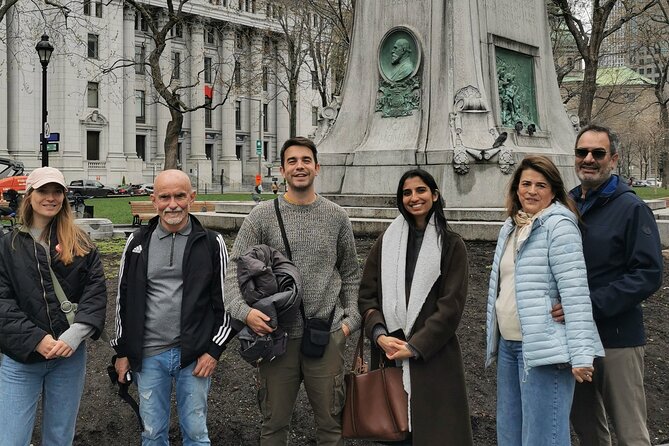
Reviewed · VIEUX-MONTRÉAL WALKING TOURS
Montreal City Highlights 3 Hour Walking Tour | Gratuity-Based
A first look at Montreal city life. This is a gratuity-based highlights walk built for first-timers, with a route that moves from big downtown icons to Old Montreal landmarks in about 3 hours. I like that the guide approach is friendly and chatty, and you also get a clear, direct route that helps you get your bearings fast.
I also like the practical pacing of the stops: even when each one is short, you still get enough time to notice architecture, major squares, and where to come back later. One watch-out: the walk can feel like a fast-paced sprint, and a few people report that it can be hard to hear the guide in moments when the group stretches out.
In This Review
- Key Highlights You’ll Actually Feel on the Walk
- Price and the Gratuity Model: Why This Tour Feels Low-Risk
- Meeting Points and the “One-Loop” Route Idea
- Dorchester Square: The Former Cemetery Turned Urban Park
- Downtown Icons: Place Ville-Marie, Victoria Square, and the Business Core
- Pointe-à-Callière: Montreal’s Birthplace and the Archaeology Lesson
- Old Montreal Squares: d’Youville, d’Armes, and City Hall
- Notre-Dame Basilica: Gothic Revival Craft in Plain Sight
- Old Port and Place Jacques-Cartier: River Views and Street Life
- Modern Downtown Voices: Place des Montréalaises, Complexe Desjardins, and Place des Arts
- Chinatown in One Block: Food Streets and Shop Windows
- Underground City: How Montreal Stays Walkable in Winter
- What to Do After: Turn This Tour Into Your Personal Montreal Day Plan
- Who This Tour Fits Best (And Who Might Want a Different Pace)
- Should You Book This Montreal Highlights Walking Tour?
- FAQ
- Is this tour really gratuity-based?
- How much does the tour cost?
- How long is the tour?
- What language is the tour offered in?
- Where do I meet the guide, and where does the tour end?
- How many people are in a group?
- Do I need to pay admission at the stops?
- What if the weather is bad?
- What’s the cancellation window?
Key Highlights You’ll Actually Feel on the Walk
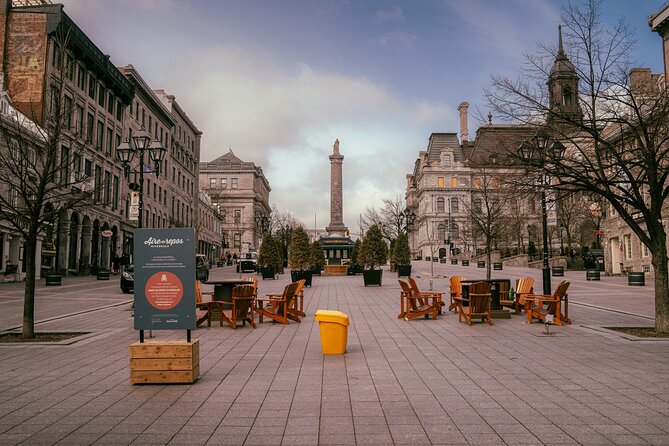
- Downtown-to-Old Montreal route: You get a starter map of Montreal without needing to plan every turn.
- Landmarks in quick snapshots: Places like Notre-Dame Basilica, City Hall, and the Royal Bank Tower show up in one connected loop.
- A real sense of layers: From a former cemetery site turned park to archaeology at Pointe-à-Callière, you see Montreal’s changes over time.
- Mix of old and new: Old Port and historic squares sit alongside modern downtown stops and a performing-arts complex.
- Weather-smart options built in: The Underground City portion makes the winter-proof angle of Montreal feel real, not theoretical.
- Guide-led, tip-supported experience: You pay a small fee, then decide your gratuity based on the value you feel.
Price and the Gratuity Model: Why This Tour Feels Low-Risk
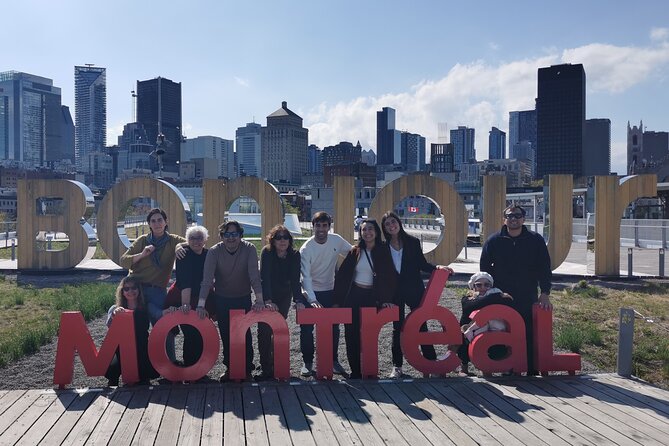
Let’s be straight about money. The listed cost is $5.00 per person, but it’s not the same as paying for admission tickets or a fully prepaid “all-in” guided package. The tour works on a gratuity-based model, and the fees you pay here are described as booking fees—so your guide’s pay depends on tips.
That can be a good thing. With a lower base price, you’re not locked into a big spend just to try a first orientation walk. But it also means you should be ready to tip if you want to support the guide and the service.
Group size also matters for value. This tour caps at 32 travelers, so it’s not a giant herd with zero personal attention. You’ll still be in a group, but it’s small enough that you can usually keep up with the story.
Keep wandering the cobblestones with more Vieux-Montréal walking tours from Montreal



Meeting Points and the “One-Loop” Route Idea
The tour starts at Dorchester Square (2903 Rue Peel, Montréal, QC H3B 4P2). It ends at Place des Arts (175 Rue Sainte-Catherine O, Montréal, QC H2X 3X5), which is a helpful landing zone if you want to keep exploring after the walk.
This route is designed to feel like one long “look at the city” line. You move through downtown skyscraper territory, then into Old Montreal squares and churches, and later out toward Chinatown and the Underground City before finishing near the performing-arts district. The benefit for you: after 3 hours, you’ll know where the major “I should come back here” spots are.
It also helps that the tour is described as near public transportation. That means you’re not trapped. If you get tired, you can usually re-route yourself back to where you’re staying without needing to commit to the whole day on foot.
Dorchester Square: The Former Cemetery Turned Urban Park
Your first stop is 1555 Rue Peel, at Dorchester Square. This isn’t just a pleasant downtown break. The park is a historic space created in the late 1800s, developed between 1876 and 1880 on the site of the former Saint-Antoine Cemetery, where around 50,000 people were interred.
That detail changes how you look at a small square. Instead of treating it like background scenery, you’ll see it as a clue to Montreal’s layered past—how the city built over earlier realities as it grew.
The short stop works well here because you’re not meant to study for hours. You’re meant to absorb one key idea: Montreal isn’t just old buildings. It’s old decisions, too.
Downtown Icons: Place Ville-Marie, Victoria Square, and the Business Core
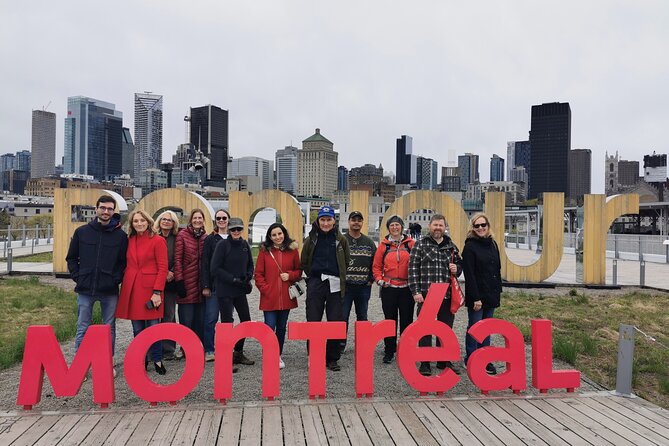
Next you step into the center of modern Montreal with Place Ville-Marie. It’s known for its striking cruciform skyscraper look and an observation deck. It’s also a hub where you can find shopping and dining, which means the tour is pointing you toward a practical “downtown base” for later.
Right after that, you get Victoria Square for a quick reset. It’s a historic public square with statues and green space, surrounded by major architecture. Even in a short window, it’s a nice shift from office towers to a more open, human-scaled space.
Then the walk keeps going with Montreal World Trade Centre and the Royal Bank Tower. The World Trade Centre is a modern office complex tied to business and events. The Royal Bank Tower is where the architecture fan in you will likely perk up: it’s an iconic Art Deco tower and was once the tallest building in Canada.
This set of stops is useful if you’re the type who likes to understand the city’s “why.” You’ll see how Montreal’s downtown identity is built from corporate power, skyline design, and public spaces that sit right in the middle of it.
Pointe-à-Callière: Montreal’s Birthplace and the Archaeology Lesson
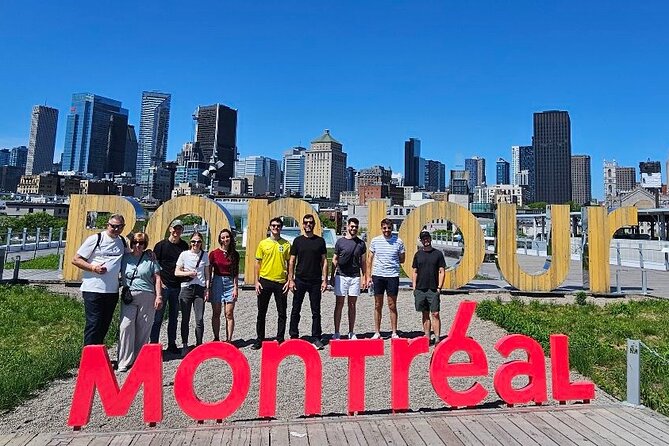
A highlight stop is Pointe-à-Callière, Montreal Archaeology and History Complex, at the city’s birthplace. You’re given time to explore ancient ruins and interactive exhibits, with themes reaching from Indigenous roots to more modern chapters.
In a tour that moves fast, this is the one stop that adds depth. It’s not just sightseeing. It’s learning where the story began and how artifacts and remains shape what you think Montreal is.
Since the scheduled visit is short, treat this as a preview. If you’re the kind of person who later wants to spend real time reading labels and taking in exhibits, Pointe-à-Callière is exactly the place you’d likely want to return to on your own.
See the sights on more city tours around Montreal




Old Montreal Squares: d’Youville, d’Armes, and City Hall
When the tour reaches Place d’Youville, you’re dropped into classic Old Montreal atmosphere: cobblestone streets, heritage buildings, and a square that hosts cultural events and outdoor art. This stop helps you understand why Old Montreal draws people back even when they’ve already seen one church and one street.
Then comes Place d’Armes, another Old Montreal hub surrounded by big architecture. It’s known for outdoor events and public art. And it sets up the next stop naturally because it’s close to the grand church that people come to see.
Right after, you pass Montreal City Hall. The building is described as Second Empire style and tied to the city’s political and administrative center. This is one of those moments where you notice that Montreal doesn’t just preserve old buildings—it uses them as part of the functioning city.
If you like your history practical instead of academic, these squares are a smart way to get it. You’re learning through shape, materials, and placement.
Notre-Dame Basilica: Gothic Revival Craft in Plain Sight
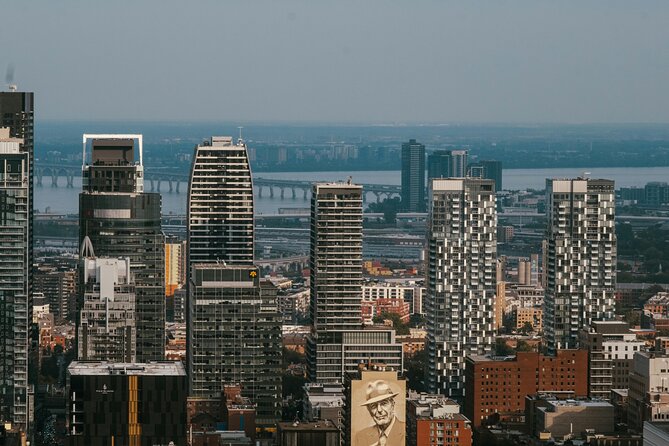
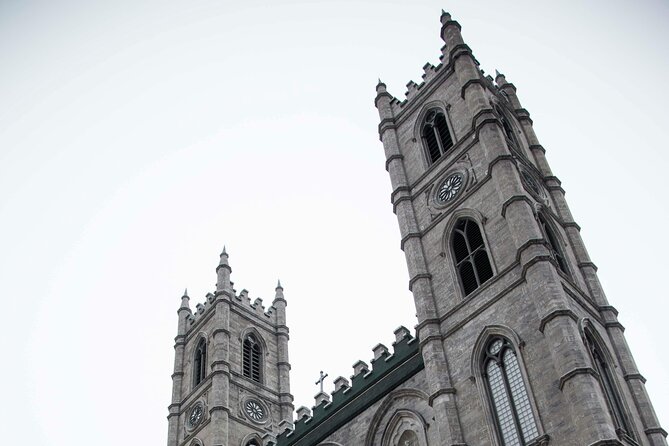
The tour includes a scheduled stop at Notre-Dame Basilica. It’s a Gothic Revival church famous for intricate woodwork, stained glass windows, and a magnificent interior.
The benefit of including it on a walking tour is that you’re not choosing it as a separate ticket-heavy decision. You’re getting it as part of the city flow, which makes it easier for you to justify a quick stop even if you’re not a hardcore church visitor.
With only about 15 minutes here, your best move is simple: focus on the signature features called out in the tour description. Look at the woodwork and then the stained glass before you move on. That’s how you’ll get the most impact in the time you’re given.
Old Port and Place Jacques-Cartier: River Views and Street Life
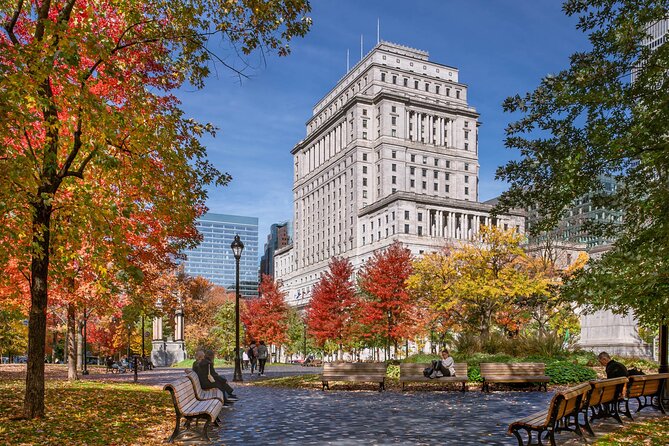
After the historic core, the route heads to the Old Port of Montreal. This is the waterfront stretch along the St. Lawrence River, with scenic boardwalk walking, plus museums, entertainment, and outdoor activities.
Then you move to Place Jacques-Cartier, where cafes and restaurants cluster around historic architecture. It’s also described as a spot for street performances and outdoor dining, which is useful if you want to know where the action tends to happen once you’re done with your guided route.
Together, these two stops do a nice job of showing Montreal as both museum-city and hang-out city. One is the river-facing walk. The other is the people-facing square.
Modern Downtown Voices: Place des Montréalaises, Complexe Desjardins, and Place des Arts
The tour finishes the downtown side with three modern stops.
First is Place des Montréalaises, a modern urban square celebrating women’s contributions to Montreal’s history and culture. It includes public art, fountains, and seating, so it works as a break spot.
Next is Complexe Desjardins, a large mixed-use complex with shopping, restaurants, offices, and cultural spaces. The tour frames it as well-known for its striking architecture and central location.
Finally, you end at Place des Arts, Montreal’s premier performing arts complex with theaters and concert halls. If you’re into music, dance, or theater, this is a strong place to continue your night or your next day.
This trio matters because it gives you a clear before-and-after. You’re not only seeing the past. You’re seeing where Montreal directs attention now.
Chinatown in One Block: Food Streets and Shop Windows
Chinatown is built into the route for about 15 minutes. It’s described as full of colorful streets, authentic Asian shops and restaurants, and markets.
That means you’re not getting a lecture. You’re getting orientation: where to wander, where to snack, and where the neighborhood energy clusters.
If you plan to do a meal later, treat this as scouting time. Note what looks good to you and come back with your appetite.
Underground City: How Montreal Stays Walkable in Winter
One of the most practical parts of the route is the Underground City (RÉSO). You get a stop at its interconnected tunnels, shopping centers, and passageways beneath downtown Montreal.
Even if you’re not traveling in winter, this is a very Montreal idea: the city uses infrastructure to create a second layer of street-level movement. The tour description also frames it as a way to stay warm while exploring downtown.
This stop is only 15 minutes, so don’t expect a full walkthrough. Instead, think of it as a map marker. If the Underground City sounds like your kind of travel convenience, you’ll know where to start.
What to Do After: Turn This Tour Into Your Personal Montreal Day Plan
Because this is a highlights walk, you should treat it like a starter kit. The tour gives you the big names and the “where to be” locations, not deep museum time at every stop.
Here’s how I’d use it if you’re traveling like most people: after the tour, pick 2 or 3 places to return to longer. For most first-timers, that usually means one of these:
- Pointe-à-Callière if you want to spend time on exhibits and ruins
- Notre-Dame Basilica if you want slower attention to the woodwork and stained glass
- Old Port if you want a longer river walk when you have the time
Also, since the route ends near Place des Arts, you’ve got an easy transition into another self-guided area without needing to fight your way across town.
Who This Tour Fits Best (And Who Might Want a Different Pace)
This tour is ideal if you want a fast, guided introduction. If it’s your first trip, you’ll likely appreciate the simple logic: downtown landmarks first, Old Montreal next, then a couple of neighborhood pivots (Chinatown and the Underground City).
It also fits solo travelers who like meeting new people in a structured way. The group cap helps keep it from feeling like you’re shouting over chaos.
But if you’re the type who needs slow pacing, it might feel too quick. Some people reported that walking can be intense and the guide’s audio can be hard to hear at times. If you prefer lots of stops with time to sit, read, and linger, you may want something with fewer locations or longer museum blocks.
Should You Book This Montreal Highlights Walking Tour?
I’d book it if you want value and orientation. The $5 starting price plus the built-in expectation of tipping makes it a low-commitment way to learn the city’s structure. The strongest pattern in the feedback is that the guides bring the story, and the route gives a solid “first look” that helps you plan your follow-up visits.
I would hesitate only if you know you hate fast walking or you’re very sensitive to not hearing the guide clearly. In that case, you might get less joy out of a 3-hour sprint with many quick snapshots.
If your goal is to understand Montreal’s layout—downtown power, Old Montreal charm, riverfront, Chinatown, and the Underground City—this one is built for you.
FAQ
Is this tour really gratuity-based?
Yes. The guide’s work is described as relying on gratuities. The amount you pay for the experience here is described as a booking fee, not the guide’s full compensation.
How much does the tour cost?
The price is listed as $5.00 per person.
How long is the tour?
The duration is approximately 3 hours.
What language is the tour offered in?
It’s offered in English. The included description also says Spanish or French when those are selected.
Where do I meet the guide, and where does the tour end?
Meet at Dorchester Square, 2903 Rue Peel, Montréal. End at Place des Arts, 175 Rue Sainte-Catherine O, Montréal.
How many people are in a group?
The tour has a maximum of 32 travelers.
Do I need to pay admission at the stops?
The scheduled stops are listed with free admission ticket for each location included in the route.
What if the weather is bad?
The experience requires good weather. If it’s canceled due to poor weather, you’ll be offered a different date or a full refund.
What’s the cancellation window?
You can cancel for a full refund up to 24 hours in advance. If you cancel less than 24 hours before the start time, the amount paid is not refunded.
More Tours in Montreal



More Vieux-Montréal Walking Tours in Montreal
More Tour Reviews in Montreal
Not quite your thing? Here are other Montréal outings worth a look around Montreal










Vieux-Montréal Walking Tours, compared.
 ★ 4.5The Original Old Montréal Walking Tour by GuidatourFrom $262,217 reviews
 ★ 5.0Old Montreal Small-Group Walking Tour | Max 10 | by MTL DetoursFrom $442,088 reviews
 ★ 4.8The Original Old Montréal Walking TourFrom $25911 reviews
 ★ 4.7Old Montreal: Traditional Ghost Walk of the Haunted CityFrom $24746 reviews
 ★ 4.5Old Montreal Ghost Walking TourFrom $26726 reviews
 ★ 5.0The Essential 101 Non-Touristy Walking Tour by Spade & PalacioFrom $51716 reviews
 ★ 4.9Top Rated Small Group Old Montreal Walking TourFrom $46611 reviews
 ★ 5.0Walking tour of Old Montreal – 16/42 ToursFrom $27592 reviews
Browse the lists this tour appears in