
Reviewed · VIEUX-MONTRÉAL WALKING TOURS
The Original Old Montréal Walking Tour by Guidatour
Old Montréal can feel like a maze without context. This walk gives you a tight orientation of the historic core, with story-driven stops that explain what you’re looking at and why it matters.
I like that the tour is built for real-world sightseeing: a small group (up to 16), a city-certified guide, and just enough structure to help you plan the rest of your trip. One drawback to note: you’ll see major sights mostly from the outside, including Notre-Dame Basilica (it’s not an inside visit), and the pace may feel brisk if you want extra time at every photo spot.
In This Review
- Key things you’ll notice on this walk
- The “orientation” value of a 2-hour Old Montréal walk
- Start at 206 Pl. d’Youville and end by Bonsecours Market
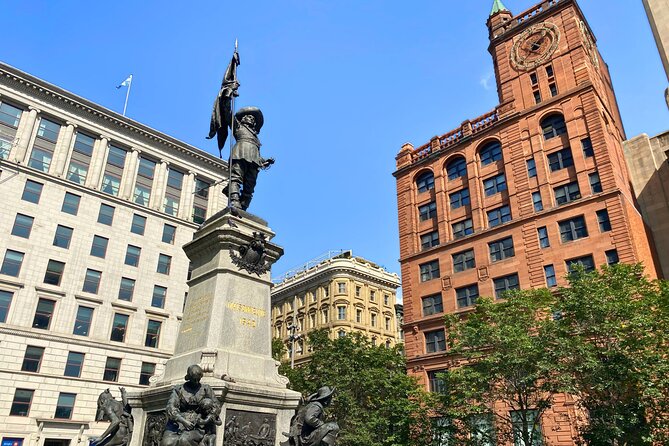
- Place Royale: the historic square you’ll recognize later
- Notre-Dame Basilica exterior: Gothic Revival without the church rush
- Place d’Armes and the Royal Bank area: reading the city’s transitions
- Montreal City Hall: why the civic buildings matter
- Bonsecours Market: more than a photo backdrop
- The street-performer square and St-Paul Street: where Old Montréal comes alive
- Group size and guide style: how you get better value in 2 hours
- Price and booking timing: what you’re really paying for
- What you’ll do best after the tour (and what to watch for)
- Should you book the Original Old Montréal Walking Tour by Guidatour?
- FAQ
- How long is the Original Old Montréal Walking Tour?
- What language is the tour offered in?
- Is Notre-Dame Basilica included inside the church?
- Where do I meet the guide, and where does the tour end?
- Does the tour run in bad weather?
- How big is the group?
- Can I get a refund if plans change?
Key things you’ll notice on this walk
- A city-certified guide who explains what you’re seeing, not just what’s there
- A small group (max 16) that keeps questions from getting lost
- Big-photo landmarks like Notre-Dame Basilica’s exterior and St-Paul Street
- Historic squares you’ll reuse later when you explore on your own
- Bonsecours Market as a long-running public market site you can still feel today
- Guide recommendations at the end so you can extend your day without second-guessing
The “orientation” value of a 2-hour Old Montréal walk
Old Montréal is gorgeous, but it can also be overwhelming. A good orientation tour helps you connect the dots between squares, churches, and streets so your self-guided wanderings feel purposeful instead of random. This one is designed around that idea: roughly 2 hours that covers the core highlights without dragging.
What makes it especially practical is the guide format. You’re with a 100% guaranteed official city-certified guide, and the tour is explicitly set up as a relaxed, fun stroll rather than a lecture marathon. If you’re arriving in town for the first time, you get a map-in-your-head right away: which streets matter, where the viewpoints are, and how the different areas link together.
The other thing I value is that the tour encourages questions. You’re not just watching someone point at buildings; you’re learning how to read the streets. I also like that you get the chance to ask for local recommendations for after the tour ends—so you leave with ideas for how to spend the rest of your Old Montréal time.
Keep wandering the cobblestones with more Vieux-Montréal walking tours from Montreal



Start at 206 Pl. d’Youville and end by Bonsecours Market
The meeting point is 206 Pl. d’Youville, Montréal, QC H2Y 2B4, and the walk ends near Bonsecours Market Street (Bonsecours Market St, Montréal, QC H2Y 1J3). The route is a loop-style flow through the old historic core, so it feels easy to keep moving even if your day is packed.
You’re also not stuck figuring out “where do I go next?” The stopping rhythm keeps you oriented: squares, major buildings, then streets that funnel you deeper into Old Montréal’s look and feel. That matters when you’re traveling with a tight schedule or you’re just trying to make sure you don’t miss the big visual anchors.
One more real-life benefit: the tour runs year-round and goes rain or shine. That means you can treat it like a reliable slot in your itinerary instead of gambling on weather. Just dress for the day—especially if you’re visiting in colder months, when you’ll want layers and comfortable walking shoes.
Place Royale: the historic square you’ll recognize later
The walk begins in Old Montréal’s historic world, and Place Royale is one of the first spots that helps it click. This square is framed as a place where centuries of stories unfolded, from market bustle to royal power. Standing here gives you a “center of gravity” for the district, which is useful later when you’re wandering and trying to remember where everything sits relative to everything else.
Place Royale also works as a mental reset. Before you move toward churches and grand civic buildings, you get a sense of how Old Montréal developed as a place where everyday life and big political events happened in the same streets.
If you like history that connects to geography, this stop is for you. You’ll likely find that it makes the later buildings easier to understand, because you’re no longer just looking at facades—you know the roles the streets played.
Notre-Dame Basilica exterior: Gothic Revival without the church rush
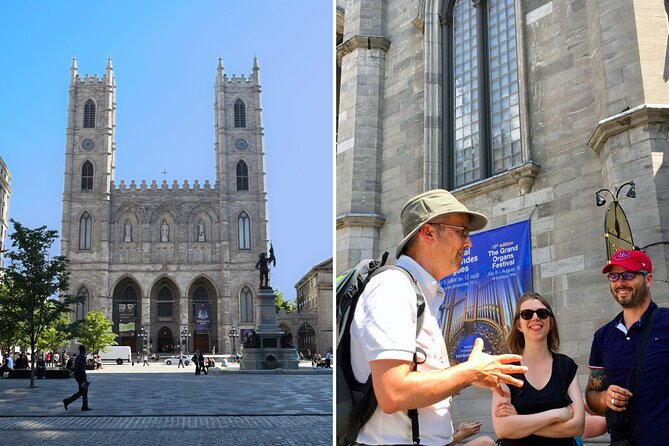
Next comes the Notre-Dame Basilica exterior, focused on the architecture rather than an inside visit. If you’re hoping to duck into churches, this is not that stop—there’s no inside time here. But seeing it from the outside is still valuable, because it’s one of the strongest visual statements in the area.
Gothic Revival details can be tricky to notice on your own when you’re walking fast with a camera. A guide helps you slow just enough to spot what to look for—shape, style cues, and how the building fits the neighborhood’s overall look.
This also gives you a smoother experience if you’re on a schedule. You avoid waiting around for entry or getting stuck in a line. You still get the payoff: you’ll be able to identify the basilica quickly later, even if your route changes.
Place d’Armes and the Royal Bank area: reading the city’s transitions
As you roam, you’ll hit the part of Old Montréal where civic and institutional presence shows up in a big way. The tour highlights Place d’Armes and the nearby Royal Bank area, tying the scenery to how Montreal’s identity shaped itself over time.
This stop is useful because it gives you reference points. Place d’Armes isn’t just a pretty square; it’s one of those anchors that helps you orient. The guide also connects what you’re seeing to French heritage and the culture of the city as you move through the historic core.
If you’re curious about language and identity in Montreal, this is where the tour tends to feel most “explain-it-like-a-local.” You’ll likely get more than dates—you’ll get context that helps you interpret what you see, from signage and architecture choices to how different eras left their marks.




Montreal City Hall: why the civic buildings matter
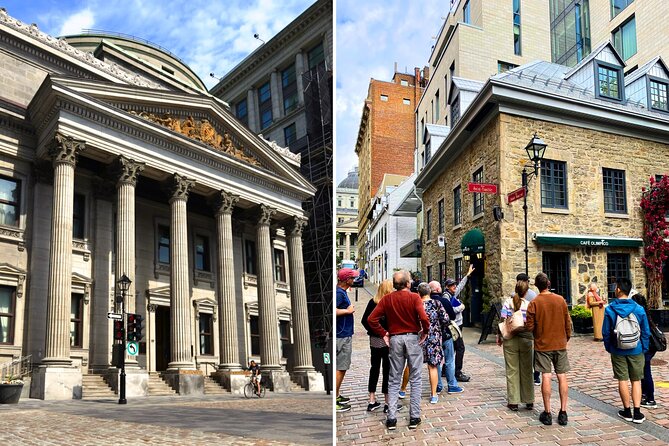
Then you’ll see Montreal City Hall, and it’s a reminder that Old Montréal isn’t only about old-world charm. It also has layers of governance and modernization woven into the historic streets.
Civic buildings can look impressive, but they can also feel “random” if you don’t understand what role they play in the story of a city. With a guide walking beside you, you get a frame for why this building shows up where it does and how it relates to the surrounding squares.
This is also a good photo moment. You’ll have a chance to capture the architecture without the chaos of trying to force photos in the middle of everything.
Bonsecours Market: more than a photo backdrop
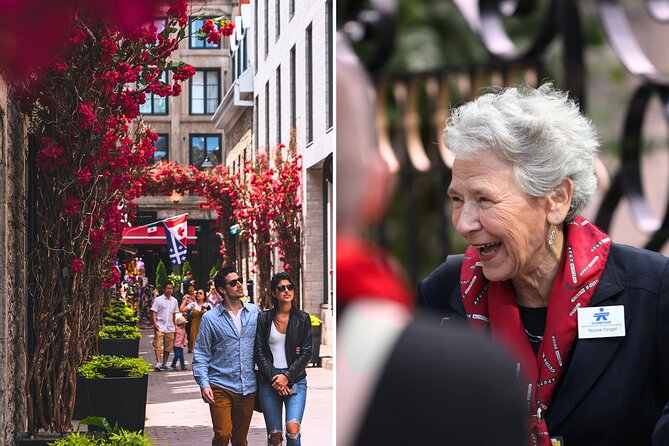
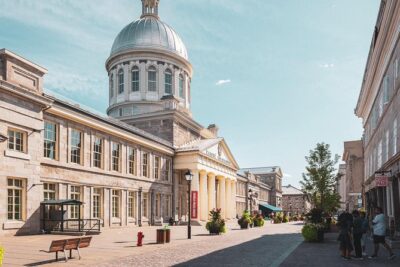
Bonsecours Market is one of the most satisfying stops because it’s both historic and still in-use. The tour notes that it has served as Montreal’s main public market for more than 100 years, which instantly makes the location feel more grounded than “a pretty old building.”
Even if you don’t shop, this stop works. Markets tell you how a city fed itself, how people moved through the area, and what the neighborhood prioritized day to day. And because you’re learning while you look, it’s easier to understand why the building’s form and placement feel so practical.
If you like buying small souvenirs, this is also the kind of place where you can make a decision quickly. You’re already there, and you’re not burning extra time later hunting for a market that matches your interests.
The street-performer square and St-Paul Street: where Old Montréal comes alive
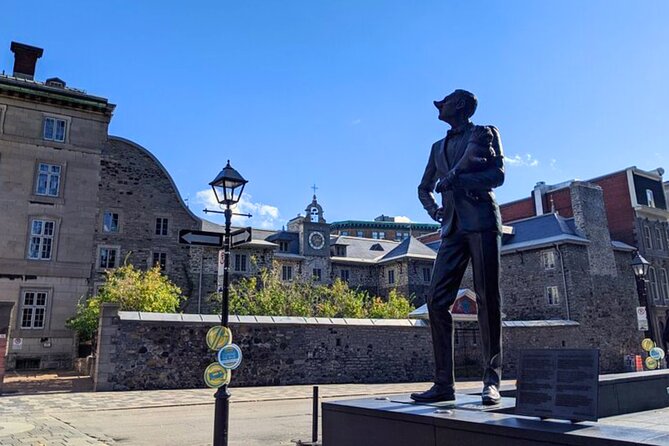
One of the highlights in the route is a lively historic square known for street performers, terraces, and views toward the Old Port and City Hall. This is the “feel it in real life” part of the walk—the point where Old Montréal stops being a museum and starts behaving like a neighborhood.
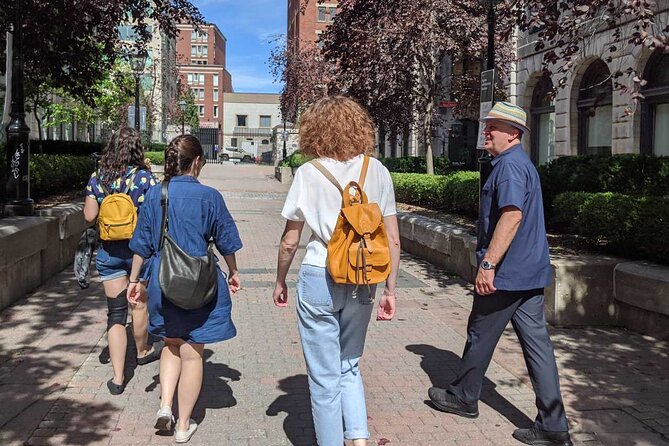
You’ll also stroll down St-Paul Street, described as one of the most picturesque streets in Montreal. It’s ideal for photos, but the bigger win is that the guide helps you understand what you’re seeing as you go—so you’re not just clicking random angles. You get a sense of how the street’s design supports movement, storefront life, and the classic Old Montréal look.
This stretch is also a good moment to ask quick questions. If something caught your eye—an architectural detail, a building style, a street branching off—this is when your guide can steer you toward what’s worth your time.
Group size and guide style: how you get better value in 2 hours
This tour caps at 16 travelers, and that small size is a big part of why it feels worth the money. In bigger groups, you often spend the whole time craning your neck or waiting for the guide to notice you. Here, the structure is easier to follow, and it’s simpler to ask questions without holding up 30 people.
The guide roster also shows up in the feedback by name—like David, Pierre, Angelina, Eduard, Frederic, François, Sarah, Thomas, JoAnne, and Pierre G. That suggests the guiding style is consistent: animated storytelling, approachable answers, and a focus on practical orientation.
Another value point: the tour is in English, and it’s described as a great choice for first-time or time-pressed visitors. If you have limited time in Montreal, you’re not sacrificing quality for speed—you’re getting the “what matters most” version of Old Montréal in a manageable chunk.
Price and booking timing: what you’re really paying for
At $26.34 per person for about 2 hours, this is priced like a low-stress, high-impact sightseeing tool. In practical terms, you’re buying three things: a guided route, a quick understanding of major sites, and photo-worthy context so you don’t just snap pictures—you interpret them.
Also, this isn’t a tour that relies on expensive entry fees. The tour notes admission ticket free for the stops listed, which keeps the cost tied to the guide service. And because it’s a small group, you get more attention than you would with a large bus-style tour.
Timing-wise, it’s often booked about 15 days in advance on average. If you’re traveling in peak season or on weekends, I’d treat that as a cue to book earlier rather than waiting until the last minute.
What you’ll do best after the tour (and what to watch for)
When a walking tour works, it doesn’t end when you stop walking. You should leave with a set of reference points you can reuse the same day. After this one, you’ll likely be better at:
- choosing where to spend extra time (squares vs. streets vs. civic buildings)
- finding quick return routes back toward Bonsecours Market or your next activity
- understanding the mix of French heritage and modern Montreal presence
That said, there’s a trade-off. Because the tour is structured for an overview, you won’t get extended time at every landmark. If you want a long, slow church visit or you’re hoping for detailed interior viewing, you’ll need to plan that as a separate stop later.
If you’re bringing kids or you’re older and want steady pacing, the 2-hour length helps. But it still involves walking on city sidewalks, so comfortable shoes matter.
Should you book the Original Old Montréal Walking Tour by Guidatour?
Book it if you want an efficient way to get your bearings fast. This is a strong first-day choice because it hits the core landmarks—Place Royale, Notre-Dame Basilica exterior, Place d’Armes, City Hall, Bonsecours Market, street performer squares, and St-Paul Street—while giving you context you can carry into the rest of your Montreal days.
Skip it (or pair it with extra time elsewhere) if your goal is lots of interior access or you want long hangs at single sights. Since Notre-Dame is view-only here, you’ll need other plans if inside viewing is a priority.
If your style is practical sightseeing—walk, look, learn enough to make the rest of your trip easier—this one fits. And at $26.34 with a small group and a city-certified guide, it’s a pretty sensible value for Old Montréal orientation.
FAQ
How long is the Original Old Montréal Walking Tour?
The tour runs for about 2 hours.
What language is the tour offered in?
The tour is offered in English.
Is Notre-Dame Basilica included inside the church?
No. The tour does not go inside Notre-Dame Basilica; it’s an exterior stop.
Where do I meet the guide, and where does the tour end?
You meet at 206 Pl. d’Youville, Montréal, QC H2Y 2B4. The tour ends near Bonsecours Market Street.
Does the tour run in bad weather?
Yes. The tour goes on rain or shine, so dress for the day.
How big is the group?
The experience has a maximum of 16 travelers, and it’s described as about 15 visitors.
Can I get a refund if plans change?
You can cancel for a full refund up to 24 hours in advance of the start time. If you cancel less than 24 hours before the start time, the amount paid is not refunded.
More Tours in Montreal

More Vieux-Montréal Walking Tours in Montreal

More Tour Reviews in Montreal
Not quite your thing? Here are other Montréal outings worth a look around Montreal












Vieux-Montréal Walking Tours, compared.
 ★ 5.0Old Montreal Small-Group Walking Tour | Max 10 | by MTL DetoursFrom $442,088 reviews
 ★ 4.8The Original Old Montréal Walking TourFrom $25911 reviews
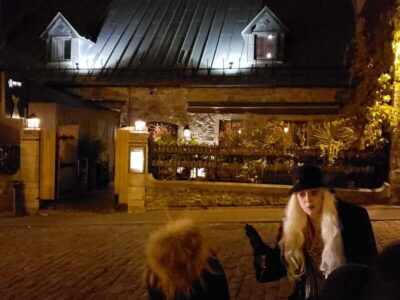 ★ 4.7Old Montreal: Traditional Ghost Walk of the Haunted CityFrom $24746 reviews
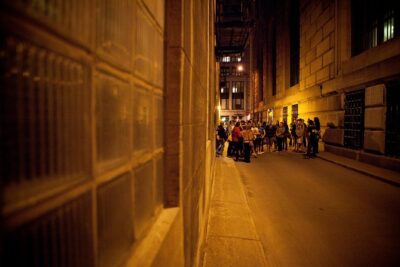 ★ 4.5Old Montreal Ghost Walking TourFrom $26726 reviews
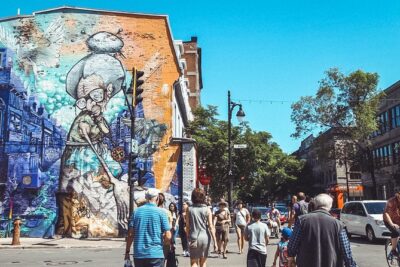 ★ 5.0The Essential 101 Non-Touristy Walking Tour by Spade & PalacioFrom $51716 reviews
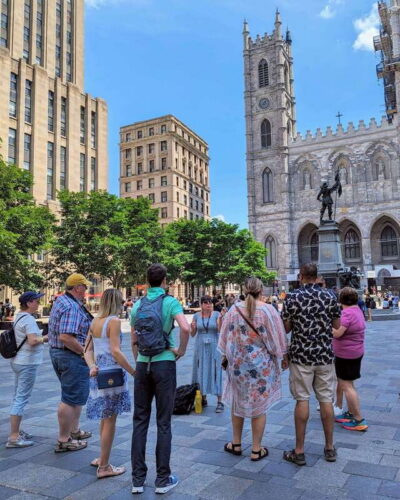 ★ 4.9Top Rated Small Group Old Montreal Walking TourFrom $46611 reviews
 ★ 5.0Walking tour of Old Montreal – 16/42 ToursFrom $27592 reviews
 ★ 4.5Montreal Old Port: Urban Zipline TicketFrom $21489 reviews
Browse the lists this tour appears in