
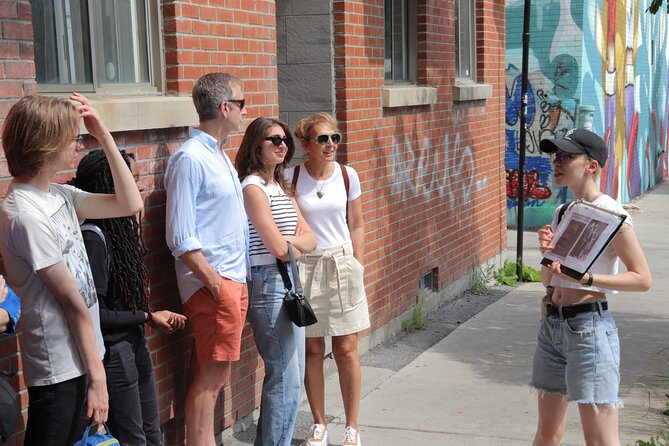
Reviewed · VIEUX-MONTRÉAL WALKING TOURS
Rabbis, Writers and Radicals: Montreal Jewish History Walking Tour
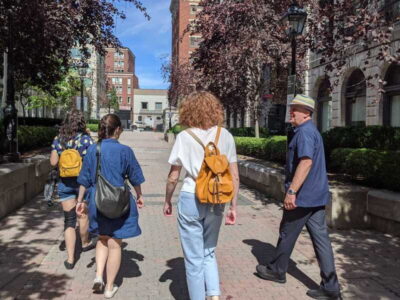
Montreal’s Jewish past shows up in plain sight. This walking tour through the Plateau and Mile End turns street corners into stories, with a local guide guiding you through themes like community life, debate, and activism. It’s built for people who want context, not just plaques.
I love the local-guide focus. The best moments come from a person who can answer follow-up questions and connect what you’re seeing to bigger ideas. The tour also feels family friendly, with a pace that can work for different ages.
One thing to consider: the experience can lean more like a spoken presentation than a casual chat. If you’re sensitive to hearing details, you may want to pick a spot where you can clearly follow the guide’s pace and volume.
In This Review
- Key highlights you’ll care about
- Rabbis, writers, radicals: what this walk is really about
- Price and time: why $24.03 feels fair (and when it won’t)
- Where you start and end on St-Laurent (and why the museum isn’t the meeting point)
- A stop-by-stop feel: what you can expect to see on the ground
- 1) Early immigrant roots and the Ashkenazic community footprint
- 2) Rabbinic life and the social role of religious authority
- 3) Writers, language, and ideas in Montreal
- 4) Radicals, politics, and the laws that shaped daily life
- 5) A community shaped by class and conflict (a theme to look for)
- 6) Ending with the museum exhibitions nearby
- Guide style is a big deal here (and you have choices)
- Group size, comfort, and who this walk fits best
- Practical tips to get more out of your 2 hours
- Should you book this Montreal Jewish History Walking Tour?
Key highlights you’ll care about
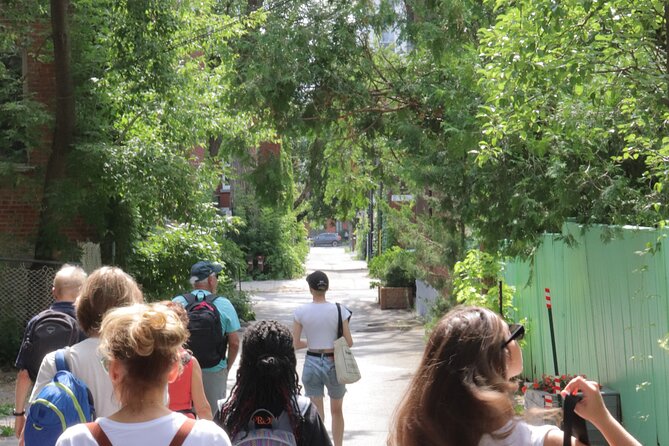
- A 2-hour walking route through Montreal’s Plateau and Mile End with a local guide
- Themes that match the title: rabbis, writers, radicals, and the arguments inside Jewish Montreal
- Small group size (max 20), which usually makes questions easier
- Discussion topics include padlock laws and anti-Zionist Jews, not just general facts
- Multiple guide styles, so communication matters (some guides are faster than others)
- Mobile ticket and English-only offering, with confirmation after booking
Rabbis, writers, radicals: what this walk is really about
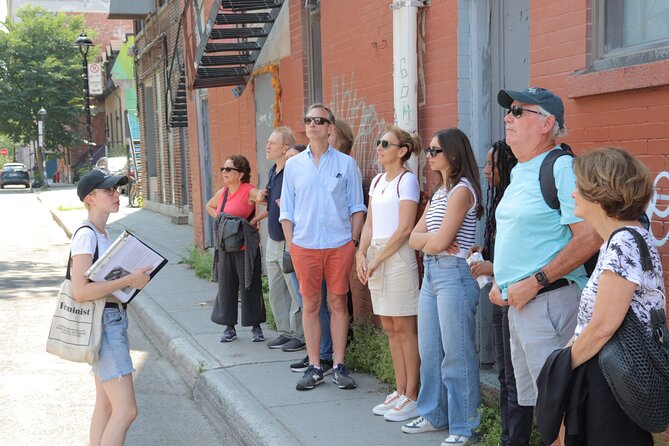
The Museum of Jewish Montreal puts this walking history on the street, where Jewish life in Montreal wasn’t one single story—it was many stories at once. The tour’s big promise is that you’ll connect people and ideas: religious leadership, writers and thinkers, and political radicals. You’re not just learning “what happened.” You’re seeing how arguments, culture, and survival shaped what communities built and how they lived.
In practice, the walk’s strongest value is how it connects the personal to the political. You’ll hear about laws and social pressure that affected Jewish neighborhoods, including references to padlock laws. You’ll also hear about the range of Jewish views on Zionism—specifically anti-Zionist Jews—which adds nuance beyond a single, simplified “Jewish community in Montreal” picture.
Keep wandering the cobblestones with more Vieux-Montréal walking tours from Montreal



Price and time: why $24.03 feels fair (and when it won’t)
At about $24.03 per person for roughly 2 hours, this tour sits in the “good use of time” category. You get a guided route with a real local guide rather than a generic audio track. For many visitors, that’s the sweet spot: enough time to get story momentum, without feeling stuck on a long schedule.
There are a few reasons the value can be strong:
- Local guide included: the guide is the product here.
- Small group cap (20 max): you’re less likely to get lost in the back row of a crowd.
- Walking format: you see the neighborhood scale, not just a slideshow.
Where value can drop is when your ideal tour is very “hands-on” or deeply detailed at every stop. Some people may want more major dates and a tighter through-line. If you like your history with a clear timeline thread from start to finish, you might want to mentally prepare for a story presented in segments rather than one perfectly stitched narrative.
Where you start and end on St-Laurent (and why the museum isn’t the meeting point)
This matters more than most tour listings admit. The tour does not simply begin and end at the Museum building. Your ticket lists the specific start and end locations around the Plateau and Mile End neighborhoods.
Here are the addresses included in the details:
- Start area: 4129 Boul. Saint-Laurent, Montréal
- End address: 5220 Boul. Saint-Laurent, Montréal
There’s also a note that the tour begins and ends at 4040 Boulevard St-Laurent. So treat the ticket as the final word for the exact corner.
The finish near 5220 St-Laurent is convenient because the Museum’s exhibitions at 5220 St-Laurent Boulevard are open to the public Thursday, Friday, Saturday, and Sunday (and starting in late May 2024, also Mondays). If you want to keep the momentum, plan to walk in after the tour when the hours line up.
A stop-by-stop feel: what you can expect to see on the ground
Even without named landmarks in the provided details, the tour’s structure is clear: it’s a history walking route across Montreal’s Jewish neighborhood areas in the Plateau/Mile End zone. Think of it less as “touring one building” and more as “walking through layers of community life.”
Here’s the kind of story progression you can expect as you move between corners and older street-level spaces:
1) Early immigrant roots and the Ashkenazic community footprint
One of the tour’s recurring story threads is the remnants of early Ashkenazic Jewish immigrants to Montreal. You’ll likely be shown how the neighborhood carried traces of community organization—where people gathered, worked, debated, and practiced religion. The value here is that it makes immigration feel real. Not abstract. Not only in books.
A drawback to watch for: if you want a heavy emphasis on buildings with specific, clearly labeled sites, you may find the “remnants” approach less satisfying than a tour that revolves around one famous synagogue or museum artifact.
Trace more of the city story with our Jewish heritage walks in Montreal




2) Rabbinic life and the social role of religious authority
Since the tour is literally titled Rabbis, Writers and Radicals, expect religious leadership to show up as more than background. Rabbinic figures and institutions are often the glue that held community routines together—education, norms, response to crisis, and leadership in public disputes.
This part tends to work best when the guide connects it to everyday neighborhood life, not just a brief mention of “religion was important.” You’ll get the most out of this section if you listen for how religious authority interacted with modern pressures and city life.
3) Writers, language, and ideas in Montreal
“Writers” isn’t a decorative word here. You should expect discussion of Jewish thinkers and cultural life—especially the role of language and writing as a way to process rapid change. This helps explain why Montreal’s Jewish community wasn’t only religious. It was also intellectual and argumentative, with a public voice.
If you’re the kind of visitor who likes when history turns into “how people argued and made meaning,” this segment is often one of the best parts.
4) Radicals, politics, and the laws that shaped daily life
This tour’s political layer is where it can feel most memorable. The inclusion of topics like padlock laws signals that you’ll cover how law and policy squeezed public life—especially for groups seen as “outsiders” or threatening to public order.
Then comes the wider internal debate: the mention of anti-Zionist Jews gives the story internal complexity. Instead of assuming one stance, you get a sense that Jewish politics in Montreal included disagreement and competing visions for identity.
5) A community shaped by class and conflict (a theme to look for)
One useful angle that can surface on a tour like this is class divide—how wealthy and working-class Jewish Montreal looked different, organized differently, and argued differently. Even when class isn’t spelled out as the tour’s main spine, you’ll often hear small clues that point to it: who had influence, what kinds of public activity were easier, and which voices got listened to.
If you strongly prefer a tour built around a single theme thread (like class all the way through), you may find some of the themes feel like “interesting chapters” rather than one tightly joined narrative.
6) Ending with the museum exhibitions nearby
Finishing near 5220 St-Laurent is practical. After you walk, you can connect what you heard to what you see inside the Museum. It’s a good way to turn a story into something you can keep absorbing.
If exhibitions are closed on your visit day, don’t panic. The tour still gives enough context to make the neighborhood feel less confusing.
Guide style is a big deal here (and you have choices)
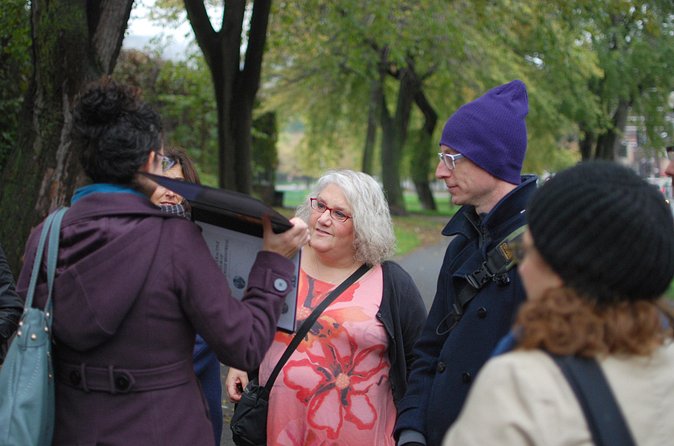
This is one of those tours where the guide can make or break your day, mainly because the presentation carries a lot of information. The guide also needs to translate history into something you can follow at walking pace.
Across the guide names that come up, the pattern is encouraging:
- Emily stands out for being attentive, answering questions thoroughly, and keeping the tone pleasant.
- Vivien is described as incredibly knowledgeable and consistently warm.
- Serafina comes up as friendly and well informed, with clear communication.
- Hannah is noted for enthusiasm and keeping a pace workable for seniors, plus interactive techniques.
- Sofia is praised for strong knowledge plus enthusiasm.
That said, there’s a practical consideration. Some guides may move quickly, or stick closely to a prepared text, and then questions beyond that script can be harder to answer. Also, when audio amplification isn’t part of the setup, it helps to position yourself near the front and speak up if you can’t hear.
My advice: if you prefer slower pacing, arrive early so you can choose a spot close to the guide. If you have questions ready, keep them focused, since guides may be following a set route-and-story structure.
Group size, comfort, and who this walk fits best
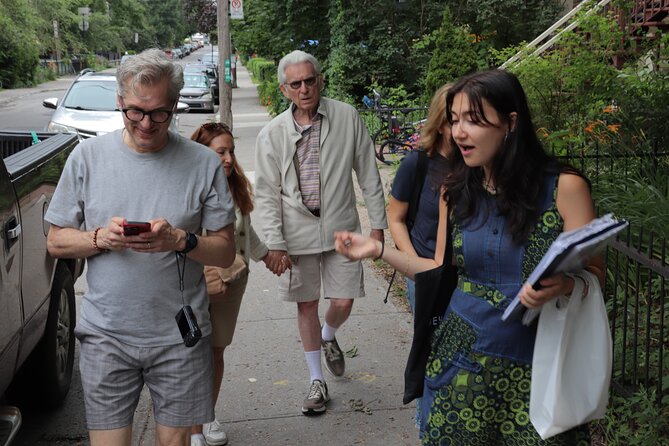
This is family friendly and capped at 20 travelers, so it’s not a giant herd. That matters. In a small group, you’re more likely to actually hear the key points and be able to ask a question if you want to.
The physical side is described as moderate physical fitness. That usually means you should be comfortable with an active walk for about 2 hours. It’s not labeled as wheelchair-accessible in the details you provided, so if mobility is a concern, you’ll want to confirm what the walking pace and stops look like for your particular needs before you book.
Who I think will enjoy it most:
- Couples who want a story-driven walk in a walkable neighborhood
- Solo travelers who like community history with clear themes
- Families looking for something educational but not stuffy
- Anyone who prefers local commentary over self-guided browsing
Practical tips to get more out of your 2 hours
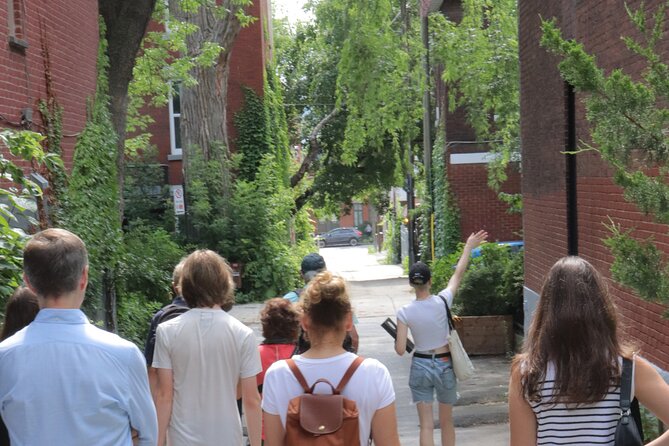
This tour works best when you treat it like a guided conversation with the city. Here’s how to set yourself up for success:
- Wear comfortable walking shoes. You’ll be out long enough to make foot comfort matter.
- Choose your spot early. If hearing is important to you, don’t start at the back.
- Bring one or two questions in your head. The tour’s structure supports Q&A, but it may be easier when questions connect directly to the stop topic.
- If your English is strong-but-not-perfect, don’t assume the guide will be unclear. Communication quality varies by guide, and the tour is offered in English.
One more small strategy: after the tour, take 10 minutes to look up at the neighborhood details you passed. History sticks better when you connect the story you heard to what you can still see.
Should you book this Montreal Jewish History Walking Tour?
Book it if you want a 2-hour, local-guide walk that mixes religion, culture, and politics, with concrete topics like padlock laws and debates such as anti-Zionist Jews. It’s also a solid pick if you like walking through the Plateau/Mile End area and seeing Montreal’s Jewish past as something that left traces in the streets.
Hold off or go in with eyes open if you want a perfectly chronological timeline, with lots of highly specific named sites at every step, or if you strongly prefer an amplified, ultra-slow lecture format. In that case, you may find the experience more “story chapters on foot” than a linear lecture.
If you’re happy trading a little structure for neighborhood context and human storytelling, this one is likely a great value at about $24.
More Jewish Heritage Walks in Montreal
More Vieux-Montréal Walking Tours in Montreal
More Tour Reviews in Montreal



Not quite your thing? Here are other Montréal outings worth a look around Montreal











Vieux-Montréal Walking Tours, compared.
 ★ 4.5The Original Old Montréal Walking Tour by GuidatourFrom $262,217 reviews
 ★ 5.0Old Montreal Small-Group Walking Tour | Max 10 | by MTL DetoursFrom $442,088 reviews
 ★ 4.8The Original Old Montréal Walking TourFrom $25911 reviews
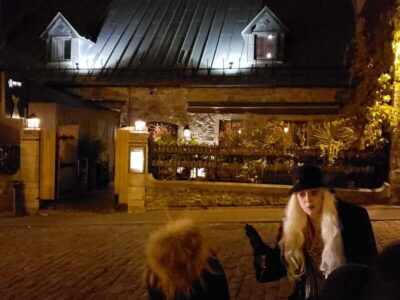 ★ 4.7Old Montreal: Traditional Ghost Walk of the Haunted CityFrom $24746 reviews
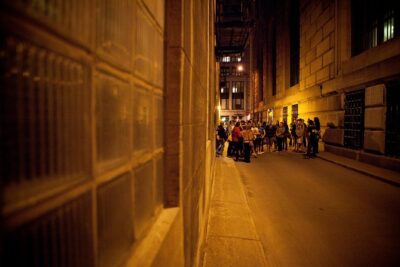 ★ 4.5Old Montreal Ghost Walking TourFrom $26726 reviews
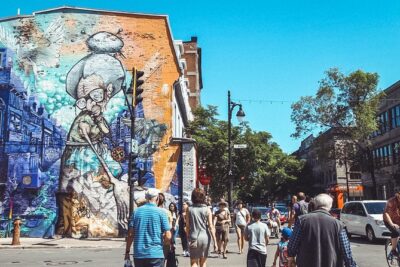 ★ 5.0The Essential 101 Non-Touristy Walking Tour by Spade & PalacioFrom $51716 reviews
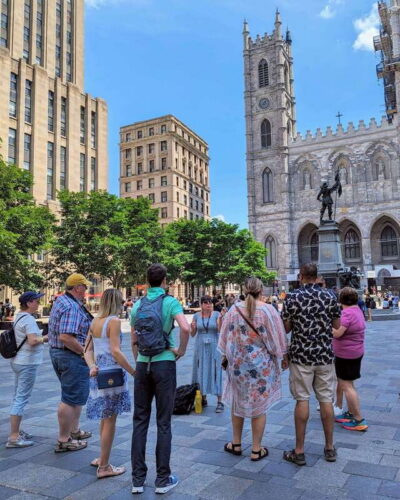 ★ 4.9Top Rated Small Group Old Montreal Walking TourFrom $46611 reviews
 ★ 5.0Walking tour of Old Montreal – 16/42 ToursFrom $27592 reviews
Browse the lists this tour appears in