
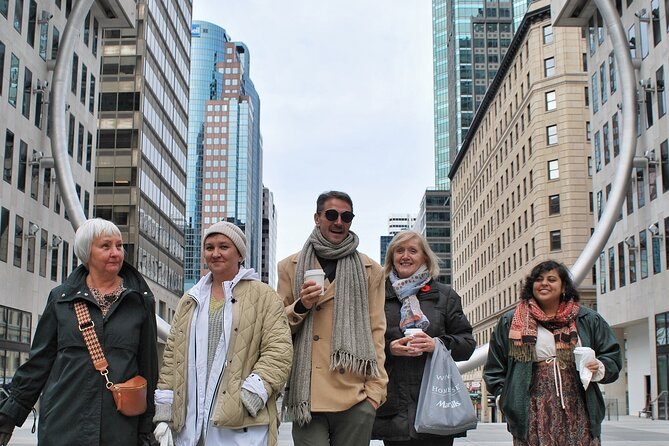
Reviewed · UNDERGROUND CITY (RESO) TOURS
Underground city & Downtown. Great way to stay warm!
Montreal stays walkable underground. This guided route shows how the world’s largest underground pedestrian network ties together downtown life, while you get visual hits like the Ring public art and big-name architecture above ground. It is a great fit when the weather turns sour and you still want to feel like you are seeing the city.
What I like most is the way you get an instant orientation: you learn where corridors lead, how downtown is structured, and how to move confidently once you are on your own. I also love the 24-hour metro pass angle, because it helps you turn the tour into real exploration.
One consideration: the tour is not built for everyone, since there is lots of walking, escalators, and stairs, and it is not recommended if you use walkers, crutches, or canes.
In This Review
- Key highlights
- Why Montreal’s Underground City Works So Well
- Stop 1: The Ring Public Art Stop for Immediate WOW Photos
- Stop 2: Underground City Navigation With a Licensed Guide
- Stop 3: Place Ville-Marie and the Mid-Century Modern Shockwave
- Stop 4: Centre-Ville (Downtown) Neighborhood Mash-Up You Can Actually Follow
- Stop 5: Place des Arts for Montreal’s Performing Arts Core
- Stop 6: Montreal World Trade Centre, Fountains, and the Berlin Wall Slab
- Timing, Weather, and What to Wear for a 2-Hour Loop
- Price and Value: Is $66.69 a Smart Deal?
- Group Size and the Real Comfort Factor
- Who This Tour Fits Best (and Who Might Want Something Else)
- Should You Book This Underground City & Downtown Tour?
- FAQ
- How long is the Underground City & Downtown tour?
- What does it cost?
- What time does the tour start?
- Where does the tour meet and end?
- Is the tour offered in English?
- Do I need a printed ticket?
- Is this tour accessible for limited mobility?
- Is there alcohol on the tour?
- Can I cancel for free?
- What if the minimum number of travelers is not met?
Key highlights
- Mostly warm, mostly indoors route through the Underground City’s tunnels and connections
- Photo stops on purpose, including the large-scale Ring installation
- Downtown landmarks in context, from Place Ville-Marie (I.M. Pei) to Place des Arts
- Downtown neighborhoods in one flow, from Quartier des spectacles to Chinatown and the Golden Square Mile
- Berlin Wall connection indoors, at the Montreal World Trade Centre
- Small group size (max 10) keeps the guide interaction strong
Why Montreal’s Underground City Works So Well
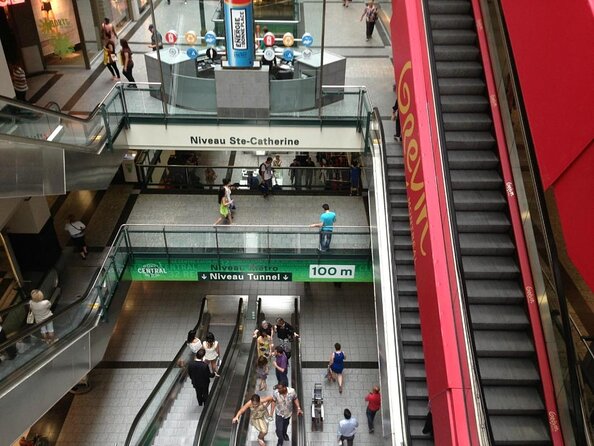
Montreal’s Underground City is famous, but it is more useful than it sounds. The point is not just novelty. It is an urban system that keeps you moving through downtown when it is cold, icy, or just plain annoying outside. On this tour, you see why it works: connections between buildings, clear circulation routes, and the way it links to transit without making you feel trapped.
I also like how the tour frames the underground network as part of daily life, not as a separate attraction. You start getting the logic of the layout, so later you can guess your way around instead of always checking maps. That is the real payoff for most first-timers.
And yes, the city still has personality above ground—so you get a blend. You are underground for comfort, then you pop out for major downtown anchors like Place Ville-Marie and the cultural core around Place des Arts.
Duck below street level with more RESO and downtown walks in Montreal

Stop 1: The Ring Public Art Stop for Immediate WOW Photos
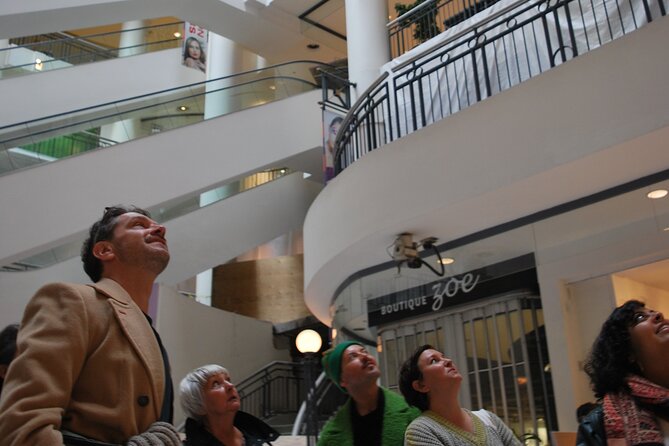
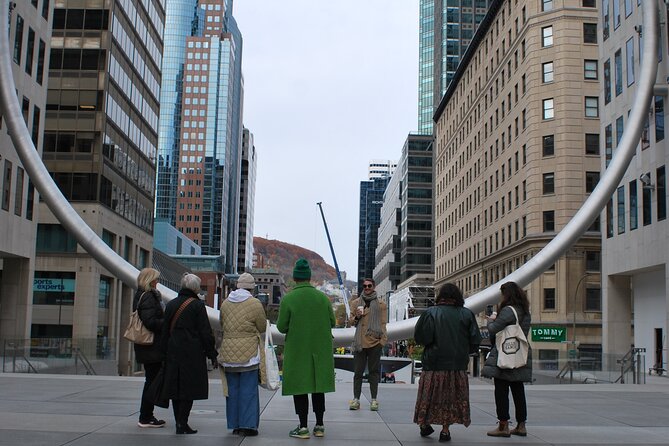
You begin with a quick hit at The Ring, a large-scale modern installation by a renowned artist. It is designed for exactly what you want right away on arrival: photos that look intentional, not accidental.
This short stop matters more than the minutes suggest. It sets a relaxed tone. You are not trudging through logistics at the start—you get a landmark, you get your bearings, and you are ready to focus on the bigger story the guide is about to build.
Stop 2: Underground City Navigation With a Licensed Guide
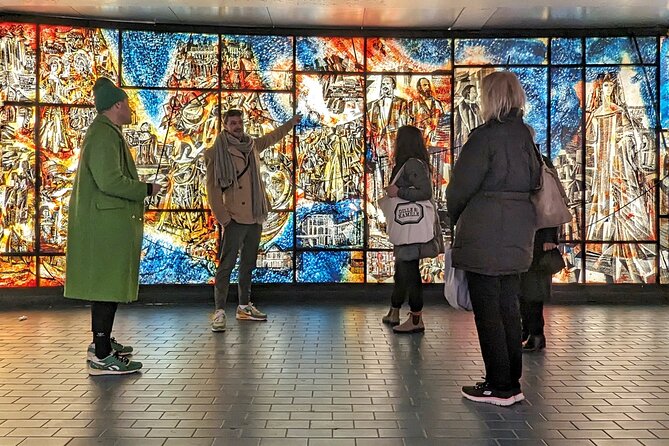
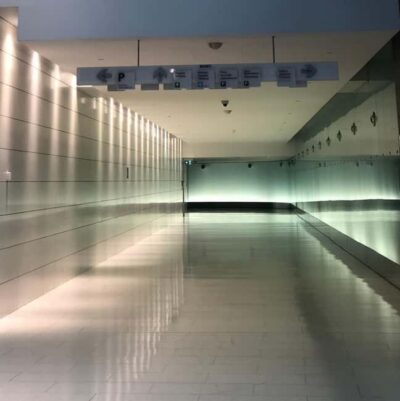
This is the main event. You spend about 45 minutes walking through the Underground City tunnels, pathways, and downtown metro connections with a licensed guide who can explain what you are looking at while you are moving.
Here is what you are really learning while you walk:
- How underground routes connect to downtown blocks and major buildings
- What kinds of corridors you will use most often (so you do not feel lost later)
- How the system functions as a practical alternative to street walking in bad weather
It is also a rare moment where a city planning story becomes personal. The tour does not treat the network like a museum exhibit. You experience it as a route—directional, functional, and designed to reduce friction in winter.
A major plus: the Underground City can be intimidating if you have never seen it. A guided walk turns that anxiety into confidence. When you know a few key connections, you start moving like you belong there.
Stop 3: Place Ville-Marie and the Mid-Century Modern Shockwave
Next you reach Place Ville-Marie, the heart of downtown and tied directly to the Underground City. This is where you shift from underground flow to standout architecture.
The star here is the mid-century modern design by starchitect I.M. Pei. Even if you are not an architecture nerd, it is the kind of building that makes you understand how Montreal planned for downtown intensity—office towers, pedestrian access, and a city that keeps working even when the weather does not cooperate.
This stop is also a useful mental reset. After a long stretch underground, you get daylight and scale. It helps you remember what the underground connections are supporting: a dense downtown that people actually live in and move through all year.
Stop 4: Centre-Ville (Downtown) Neighborhood Mash-Up You Can Actually Follow
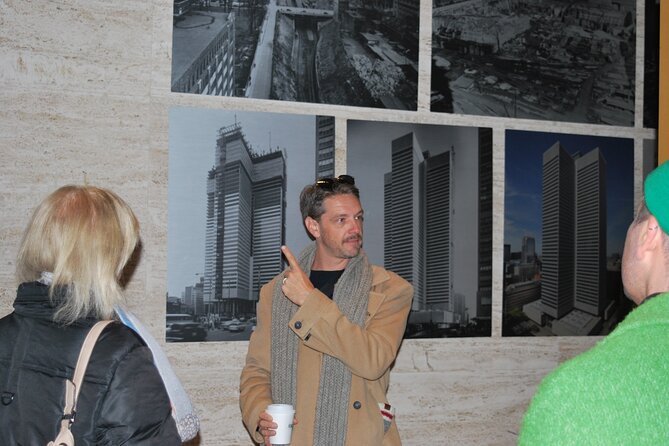
The tour then opens up downtown with a broad sweep of what makes Montreal feel like Montreal. You get the cosmopolitan neighborhoods that shape the city’s identity, plus a mix of old and new that you do not see everywhere.
This section includes stops and sights around:
- Quartier des spectacles (the entertainment district)
- Chinatown
- The International Quarter
- The Financial District
- The Golden Square Mile
You also pass architectural contrasts: neo-gothic cathedrals from earlier eras sitting next to modern skyscrapers. That mix is one of Montreal’s strongest “how did they do that?” features. It is part of why the city feels stylish without trying too hard.
If you like energy, you will appreciate how the route touches lively nightlife areas, shopping streets, and festival ground space. And if you like brains, you get universities and hockey arenas in the picture too. That balance—culture, sports, business, and nightlife—is why the tour works even for people who do not want a strict walking tour checklist.
One practical note: this is a short stop window, so think of it as orientation and highlights, not a deep look at every neighborhood corner.
See the sights on more city tours around Montreal




Stop 5: Place des Arts for Montreal’s Performing Arts Core
Then you move to Place des Arts, a modern performing arts center that anchors Montreal’s cultural identity in a very visible way.
You are in good company here. The site is home to institutions like the Grand Ballets Canadiens, the Opéra de Montréal, and the Orchestre Symphonique de Montréal. Even if you do not attend a show that day, just knowing where these major groups operate helps you understand what the city is valuing.
This stop also supports the pacing. You have been walking through practical underground infrastructure, then through downtown motion. Place des Arts gives you a cleaner cultural pause—an area that feels built for performances and gathering.
Stop 6: Montreal World Trade Centre, Fountains, and the Berlin Wall Slab
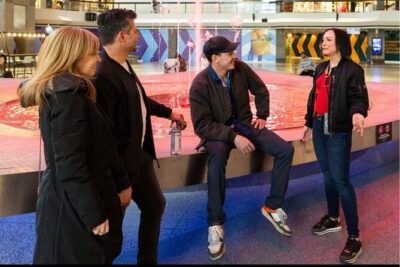
Your final highlight is the Montreal World Trade Centre, where the experience gets a little surreal in the best way: indoors meets outdoors, with fountains and a slab of the Berlin Wall.
That Berlin Wall piece is not random. It signals Montreal’s connections to global history and international identity, and it gives the tour a memorable ending object you can recall later while walking downtown.
You also finish near major transit and close to places many first-timers want next: Old Montréal, Chinatown, and plenty of places to eat. That matters because the tour ends right when you are usually ready to keep going. You are not stuck miles away from your next plan.
Timing, Weather, and What to Wear for a 2-Hour Loop
This tour runs about 2 hours, starting at 10:30 am. The big practical advantage is that it is designed for comfort. Since you spend meaningful time in the Underground City and in indoor downtown spaces, cold snaps feel less punishing.
Still, do not underestimate the physical side. The format includes lots of walking, plus escalators and stairs. Wear shoes you trust. If you plan to do shopping or extra exploring afterward, you will be glad you did not wear anything fragile.
If you are traveling with kids or teens, the route can be a great way to break up the day: lots of visual stops, lots of movement, and a guide who can explain the logic as you go.
Price and Value: Is $66.69 a Smart Deal?
At $66.69 per person for about 2 hours, this is positioned as a value-first city orientation tour. Here is how it earns its cost in real terms:
- You get orientation fast. Underground systems are hard to self-navigate the first time. Paying for guidance saves time and reduces the trial-and-error that can eat half a day.
- You get a continuing-exploration boost. The 24-hour metro pass makes this feel like more than just two hours of walking. It helps you keep moving the rest of your trip without having to figure out transit separately.
- You see multiple “layers” of downtown. You get a public art moment, underground navigation, major architecture, neighborhood highlights, arts landmarks, and a history artifact (the Berlin Wall slab). That is a lot to compress into one loop.
Could you do parts on your own? Yes. But you would lose the benefit of a guide turning confusing corridors into understandable routes—and you would likely spend extra time getting oriented.
Group Size and the Real Comfort Factor
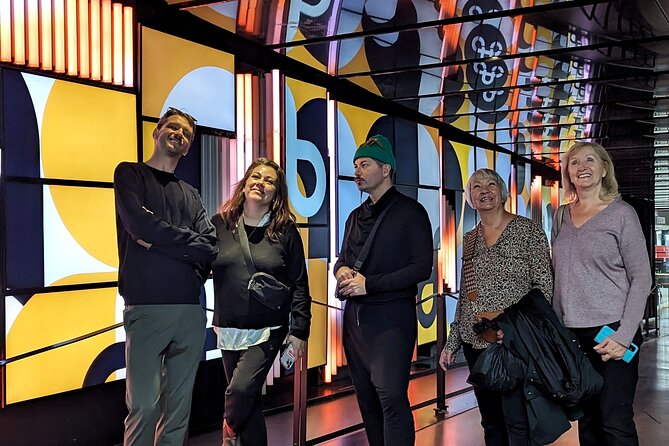
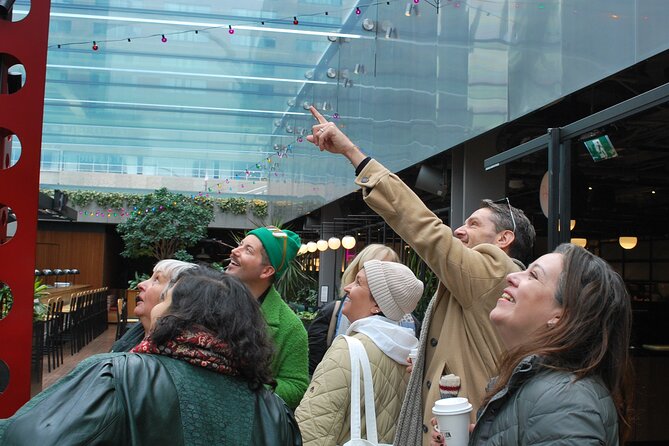
The tour caps at 10 travelers. That small size matters. It makes it easier to move together through busy downtown areas and keeps questions from getting swallowed by the group.
Also, your guide can tailor explanations to what you are actually seeing at that moment—especially important in a network like the Underground City, where details only make sense in context.
If you enjoy asking questions and getting clear, practical answers, this format fits well.
Who This Tour Fits Best (and Who Might Want Something Else)
This tour is a strong choice if:
- You are visiting in cooler weather and want a warm, indoor-heavy strategy
- You want downtown orientation without planning a complicated route
- You like architecture, art, and city planning stories that connect to real movement
It is less ideal if:
- You rely on walkers, crutches, or canes, since it is not recommended and involves stairs and escalators
- You need a fully step-free route, because accessibility is listed as not available for limited mobility
For everyone else, it is a smart way to get your Montreal footing quickly—especially if this is one of your first stops after arrival.
Should You Book This Underground City & Downtown Tour?
Book it if you want to understand Montreal fast—without getting stuck outside in bad weather or wandering underground without a map. The Underground City orientation alone is worth it for most first-timers, and the mix of downtown anchors (Place Ville-Marie, Centre-Ville neighborhoods, Place des Arts, and the World Trade Centre) gives you a satisfying overview in just two hours.
Skip it if you want a slow, deep museum-style tour. This is a moving, orientation-focused walk. And if mobility aids are part of your day-to-day needs, you will want a different format that better matches your access requirements.
If you can handle stairs and you want to leave feeling like you can navigate downtown confidently, this is one of the most practical first-day picks in Montreal.
FAQ
How long is the Underground City & Downtown tour?
It lasts about 2 hours.
What does it cost?
The price is $66.69 per person.
What time does the tour start?
The start time is 10:30 am.
Where does the tour meet and end?
It starts at 1000 Rue De la Gauchetière O, Montréal, QC H3B 4W5, Canada. It ends at 747 Rue du Square-Victoria suite 700, Montréal, QC H2Y 3Y9, Canada, near the Montreal World Trade Centre area.
Is the tour offered in English?
Yes, it is offered in English.
Do I need a printed ticket?
No. You receive a mobile ticket.
Is this tour accessible for limited mobility?
No. It is not accessible for people with limited mobility, and it is not recommended for travelers using walkers, crutches, or canes.
Is there alcohol on the tour?
Alcoholic beverages are offered for people age 18 and above.
Can I cancel for free?
Yes. You can cancel for a full refund up to 24 hours in advance of the experience start time.
What if the minimum number of travelers is not met?
If the experience is canceled because the minimum isn’t met, you will be offered a different date/experience or a full refund.
Even More City Tours to Take in Montreal
More RESO & Underground Walks in Montreal



More Tour Reviews in Montreal



Not quite your thing? Here are other Montréal outings worth a look around Montreal











Underground City (RESO) Tours, compared.
 ★ 5.0Montreal RESO Underground City + Downtown Tour by MTL DetoursFrom $35254 reviews
 ★ 4.8RESO Underground City and Downtown Walking TourFrom $30236 reviews
 ★ 4.8Discover Reso – The Underground CityFrom $29209 reviews
 ★ 5.0Discover Montreal’s Underground City – ResoFrom $3063 reviews
 ★ 4.5Explore the Underground City with a local comedianFrom $5249 reviews
 ★ 5.0Montréal Downtown and Underground City Private Walking TourFrom $16847 reviews
Browse the lists this tour appears in